Little Panda: Princess Party
- 4.0
- Rating
- 10.00M
- Installs
- Free
- Price

 Analysis by App-foxy
Little Panda: Princess Party presents itself as a gentle dress-up game for children, but its appeal comes from more than choosing a pretty outfit. I found it works best as a small, guided creative space where a child can prepare a princess for a celebration, make visual choices, and enjoy the result without the pressure found in faster games. The setting is immediately understandable, the controls are approachable, and the presentation keeps the mood bright from the first interaction.
Developed by BabyBus, this free educational game is aimed at Everyone and runs on Android devices using version 6.0 or later. Its store summary describes a princess ball dress-up experience, while the short description identifies it simply as Little Panda. That combination tells you what to expect: a familiar fantasy setting, a friendly animal character, and play built around appearance rather than competition.
I would recommend it most to younger children who enjoy costumes, color matching, and pretend celebrations. It is less suitable for someone looking for a deep fashion simulator, a story-heavy adventure, or a game with demanding challenges. The key question is not whether it has complex mechanics; it does not try to. The better question is whether its simple choices create a satisfying little routine. In my experience, they do, provided the player enjoys calm, guided play.
You May Also Like

 Blood Strike: 2.5 Anniversary
Blood Strike’s Loadouts Turn Every Drop Into a Tactical Gamble
A close look at Blood Strike’s custom loadouts: how fast access to signature weapons reshapes its battle royale rhythm, rewards preparation, and narrows the gap between fights.

 Pandora - Music & Podcasts
Pandora’s Music Is Easy to Start, but Harder to Recover
Pandora’s strength is its low-effort path from a seed to a station. Its weak spot is how much confidence it asks you to place in connection, setup, and quiet recovery.

 8 Ball Pool
 Is Built on Rivalries, Rematches, and Routine
A close look at the rivalries, rematches, shared routines, and unanswered safety questions that turn a quick pool match into a persistent mobile community.

 Samsung Music
’s Quiet Strength Is Playing What You Already Own
Its reach comes less from spectacle than from dependable access to a personal library. That simplicity is both the app’s strongest retention engine and its ceiling.

 AccuWeather: Weather Radar
AccuWeather Review: A Quick, Clear Forecast for Everyday Decisions
For everyday plans, the best forecast is the one you can understand quickly. AccuWeather makes rain timing, radar, and local conditions easy to act on, with a few trade-offs.

 Hill Climb Racing
Why Hill Climb Racing Still Turns Crashes Into One More Run
A tiny car, a bumpy hill and one more upgrade: Hill Climb Racing keeps resurfacing because its simple chaos makes every near-miss feel personal.
More From Our News Desk



A bright first impression with a clear purpose
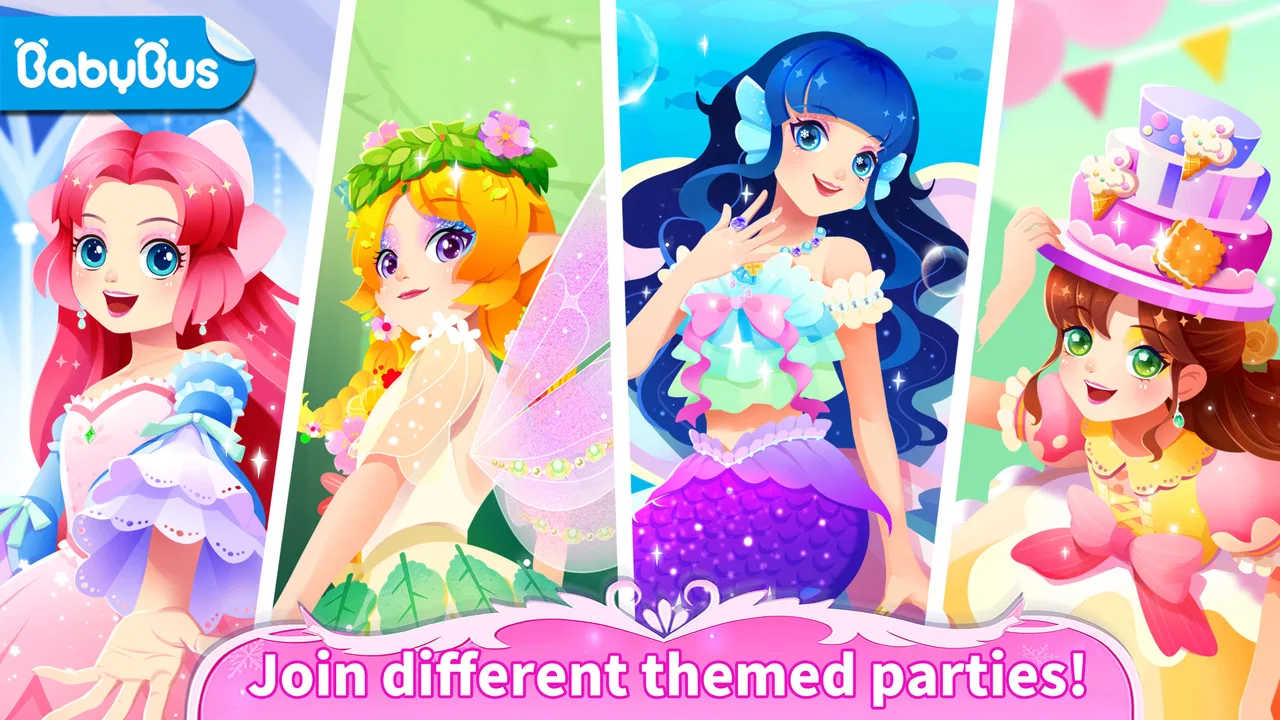
The first few moments communicate the game’s priorities well. The princess-party theme is easy to read, and the visual presentation uses cheerful character design rather than realism. That matters for younger players because the screen does not ask them to understand a complicated world before they can begin. The central activity is visible and inviting: prepare the character for a special event, make choices, and see the finished look.
I also like that the game does not depend on reading long explanations to make sense. A child can usually understand the basic goal from the character, the clothing, and the celebratory setting. This makes it useful for a short play session while an adult is nearby, especially when the child wants to do something creative but is not ready for a game with layered menus or difficult instructions.
The free entry point is another practical advantage. Families can try the experience without committing to a purchase, although optional in-app items range from $0.99 to $2.49 each. I would still suggest that an adult look at the purchase settings before handing over the device. The amounts are small individually, but a child may naturally want to keep expanding the available choices once the dress-up loop becomes familiar.
The game has reached over 10 million installs and holds an average rating of 3.8 from around 34,000 ratings. I read that as a sign of broad recognition rather than a guarantee that every child will enjoy it. Dress-up games are naturally personal: one player may happily repeat outfit changes, while another may quickly ask for puzzles, exploration, or a stronger sense of progression.
Who will settle into it quickly
Children who already enjoy playing with dolls, selecting colors, or inventing party scenes are the obvious audience. The game gives those interests a digital form without requiring fast reactions. It can also work as a quiet transition activity: after school, during a short wait, or as a brief creative break between more energetic games.
I would be more cautious about recommending it to older children who want detailed customization or a competitive goal. The princess theme and friendly art are intentionally simple. That simplicity is helpful for accessibility, but it also limits the sense of discovery for players who expect new systems, strategic decisions, or a large narrative.
The visual world speaks through costumes and celebration
The strongest part of the experience is its visual language. Rather than trying to create a realistic royal world, it uses an immediately readable fantasy mood: a princess, a party, colorful clothing, and a setting designed to feel special. The art direction makes the activity feel like preparation for an event, so even a small choice can seem meaningful to a child.
This is where the game’s educational category makes sense in a broad, practical way. It encourages attention to visual differences and gives children room to make selections. Choosing between styles, colors, or decorative details can support basic decision-making, although I would not treat it as a formal lesson. Its learning value comes through playful comparison and expression, not through teaching a defined academic subject.
One useful way to play is to ask the child to explain the outfit rather than simply tapping through choices. I might ask whether the princess is going to an evening party, a daytime celebration, or a pretend royal ceremony. That turns the dress-up process into a small storytelling exercise and helps the child notice how clothing, setting, and mood fit together.
The setting also keeps the game emotionally safe and predictable. There is no need to worry about losing a match or failing a timed challenge. A child can change direction without feeling that an earlier choice was wrong. For younger players, that freedom is more valuable than it may sound: the game allows experimentation without attaching a penalty to every decision.
Where the art direction helps, and where it narrows the experience
The polished, friendly look makes the game approachable, but it also establishes a narrow creative lane. This is specifically a princess-party fantasy, not an open-ended design studio. If a child wants vehicles, animals in different habitats, construction, or a more ordinary everyday setting, the visual theme may feel repetitive after several sessions.
I also found that the presentation does much of the motivational work. The pleasure comes from seeing the character change and imagining the occasion, rather than from unlocking a demanding objective. That is perfectly reasonable for this audience, but adults should understand the trade-off: the game is better at creating a pleasant mood than at delivering long-term challenge.
For a child who becomes frustrated by too many choices, I would use a simple rule: choose one main item first, then build around it. Starting with a dress or another prominent part of the look gives the session direction and prevents the selection process from becoming aimless. It is a small adjustment, but it makes the experience feel more like creating an outfit and less like tapping through every available option.
Sound, rhythm, and the feeling of a small celebration
The audio presentation supports the visual mood rather than competing with it. In a game built around a party, sound needs to make the activity feel upbeat without turning every tap into an urgent command. Here, the overall rhythm is best understood as gentle encouragement: choose something, see the result, and continue preparing the character.
That pacing is particularly useful for younger children. A fast soundtrack or constant pressure could make a dress-up activity feel like a race, while a completely flat presentation would make the choices feel unimportant. The party atmosphere gives the actions a reason to exist, and the steady flow keeps the session moving without demanding quick reflexes.
I would use headphones carefully, especially with a child who is sensitive to repeated sounds. As with any colorful children’s game, the screen can be stimulating even when the mechanics are calm. Short sessions are a sensible approach, and the game works well when treated as a focused activity rather than something left running indefinitely.
The rhythm also affects how adults can participate. Instead of taking over the controls, I would let the child make the choices and use the pauses between selections to talk about the result. “What should the princess wear next?” or “Which look feels more like a party?” keeps the interaction social. The game becomes a prompt for conversation, not merely a screen-based distraction.
Why the mood matters more than complexity here
In many educational games, the main appeal comes from puzzles, counting, spelling, or structured rewards. This one takes a different route. Its mood is the organizing principle, and the mechanics are there to maintain that mood. The child is not being pushed toward a difficult answer; the child is being invited to create a pleasing scene.
That makes it a better alternative to action-oriented games when the goal is calm engagement. It is not automatically better than a puzzle app, though. A child practicing a particular school skill would likely get more direct value from a dedicated learning game. Little Panda: Princess Party is strongest when the desired outcome is creative play with a light educational touch.
Simple mechanics that fit the audience
The core interaction is easy to understand: prepare the princess for the party by making appearance-related choices. That simplicity is not a flaw by itself. For a young player, it means the game can be picked up without a long tutorial or an adult explaining a complicated control scheme. The child’s attention stays on the character and the imagined event.
The most important mechanical strength is the low cost of experimentation. A child can try a combination, look at it, and reconsider. This supports a useful creative workflow: make a quick first version, identify the item that feels most important, and then adjust the rest to match it. That process teaches a basic design habit without presenting itself as a lesson.
A second practical insight is that the game can be used for guided comparison. An adult can ask the child to create two different party looks and describe how they differ. One might feel elegant, another playful, and a third colorful. Even if the game does not require these judgments, the dress-up format gives children a concrete way to practice describing choices.
A third insight is that the game suits shared decision-making better than many solo mobile games. One person can hold the device while another suggests a theme, such as a birthday party or a royal dance. The child still controls the final selection, but the activity becomes collaborative. This is especially useful for siblings or parent-and-child play when the goal is conversation rather than silent screen time.
The trade-off is that the mechanics may not hold attention once the novelty of dressing the character fades. There is no reason to expect the same kind of replay value as a game built around levels, evolving challenges, or strategic mastery. If a child asks, “What happens after the outfit is finished?” that may be the natural stopping point for the session rather than a problem to solve.
How it compares with familiar alternatives
Compared with a traditional dress-up app, this game feels more directed because the princess-party setting gives the activity a clear purpose. A completely open wardrobe can offer more freedom, but it may also leave a younger child unsure where to begin. Here, the celebration provides a simple frame: the character is getting ready for something.
Compared with a puzzle-based educational game, it offers less measurable challenge and more expressive choice. A puzzle app is the better pick when you want repeated problem-solving or a clear sense of right and wrong. This game is preferable when you want the child to make aesthetic decisions, talk about them, and enjoy a relaxed result.
Compared with a general pretend-play game, the princess theme is both its advantage and its limitation. It gives the experience a coherent identity, but children who do not connect with royal stories may have little reason to return. I would not choose it as the only game on a device; I would use it as one calm option alongside activities with different kinds of thinking.
Practical details for families
The game is free to download, which makes trying it straightforward. Optional purchases cost between $0.99 and $2.49 per item, so the sensible approach is to treat the free experience as a trial and decide whether the available play is enough before considering anything extra. I would explain this clearly to a child rather than presenting purchases as part of the normal dress-up process.
Its Everyone content rating makes the intended audience clear, but an age label does not replace supervision. Younger children may still need help with navigation, device habits, and purchase boundaries. The most comfortable setup is a short, agreed play period with an adult available if the child encounters a confusing screen.
The current version is 8.73.00.00. For installation, the device needs Android 6.0 or later. Those requirements make it accessible on many older Android phones and tablets, although the actual comfort of play will still depend on the device’s screen size and general responsiveness. A larger screen is easier for small fingers, especially when the child is choosing among several visual details.
One everyday scenario where it fits well is a quiet ten-minute break before dinner. I would let a child choose a party theme, create one outfit, and then describe why the final look works. That gives the session a beginning, a creative middle, and a natural ending. It is more satisfying than letting the child tap without a goal, and it avoids turning a simple game into an all-evening activity.
An atmosphere-first game with a clear audience
After spending time with it, I see Little Panda: Princess Party as a mood-driven dress-up game rather than a substantial adventure or academic tool. Its art, setting, and sound all point in the same direction: a cheerful, low-pressure celebration where the child’s choices shape the princess’s appearance. That coherence is its main achievement.
The game is at its best when a child wants to create, compare, and imagine. It is also a useful alternative to louder action games because the pace does not depend on winning. The strongest sessions are not necessarily the longest ones; a focused outfit, a short conversation, and a finished party look can be enough.
There are clear limits. Players seeking deep customization, extended progression, or challenging educational tasks will probably outgrow it quickly. The princess-party theme may also feel too specific for children whose interests lie elsewhere. Those are not failures so much as boundaries that define the experience.
My final recommendation is positive for families looking for a free, approachable creative game for younger children. I would install it as a gentle option, keep purchases under adult control, and use the dress-up choices as an invitation to talk and tell stories. If that is the kind of play you want, the coherent atmosphere is more valuable than mechanical depth, and BabyBus has built the experience around that idea with reasonable clarity.
FAQs for Little Panda: Princess Party
01What is the main objective of Little Panda: Princess Party?
Little Panda: Princess Party is designed to engage children in creative and interactive play by allowing them to host and participate in a virtual princess-themed party. Kids can explore various activities such as dress-up, cooking, and decoration, fostering creativity and imagination while also improving their problem-solving skills.
02Is Little Panda: Princess Party suitable for all age groups?
The app is primarily designed for young children, typically aged 3 to 8 years. It features simple controls and vibrant visuals that are easy for young users to understand and enjoy. Parental guidance is recommended for younger children to help them navigate and make the most of the app's features.
03Does Little Panda: Princess Party include in-app purchases?
Yes, Little Panda: Princess Party does include in-app purchases. While the app offers a variety of free content, additional activities, costumes, and decorations can be unlocked through purchases. Parents should monitor these options to manage spending and ensure a safe experience for their children.
04Can Little Panda: Princess Party be played offline?
Little Panda: Princess Party can be played offline, making it a convenient option for entertainment without an internet connection. However, certain features, updates, or content additions may require online access, so it's beneficial to download any necessary updates beforehand.
05What educational benefits does Little Panda: Princess Party offer?
Little Panda: Princess Party offers educational benefits by encouraging creativity, enhancing fine motor skills, and fostering social interaction through virtual party activities. The app's interactive elements promote learning through play, helping children develop cognitive abilities while engaging in fun and imaginative scenarios.
Pros
- Engaging mini-games for kids
- Colorful and vibrant graphics
- Easy-to-navigate interface
- Promotes creativity and fun
- Regular updates with new content
Cons
- In-app purchases can add up
- May require parental supervision
- Limited educational content
- Ads can be distracting
- Requires internet connection

Little Panda: Princess Party
Gallery